Why More Oversight Doesn't Build Ownership
Oversight has its place. Audits catch gaps, and regulators expect them. On its own, though, oversight produces short-term compliance that fades when attention moves elsewhere and a lack of true accountability.
The research backs this up. A 2025 study in the American Journal of Infection Control tracked more than 476,000 hand disinfections across three hospital units. In patient rooms, hand disinfection rose 27% to 31% when observers were present. People perform for an audience. When the audience leaves, so does the performance.
Heavy oversight also chips away at trust. When staff feel over-monitored for mistakes, they get defensive, stop speaking up, and keep near misses to themselves. That’s a risky combination in any setting where safety depends on people raising concerns early.
Many teams have seen this firsthand. In a 2022 ICU study, human observers recorded hand hygiene compliance of 56% to 65%. Around-the-clock electronic monitoring, with no observer present, found just 40%.
5 Ways to Help Staff Take Accountability
Southern New Hampshire Health offers a real-world example. When the hospital rolled out Vitalacy’s hand hygiene monitoring, staff worried they’d be tracked. Patti Benjamin, Executive Director of Quality, Safety, and Infection Programs, and her team turned that skepticism into ownership. Their approach applies to almost any safety initiative.
- Explain the why. People own what they understand. Connect every initiative to patient outcomes and be specific about what’s measured and how the data will be used. SNHH held huddles on every shift, ran Q&A sessions, and shared an FAQ before program launch.
- Make it safe to look. Give staff visibility into their own performance without public shaming. Let each user track their own progress privately. Peers can’t see individual results, and only leadership has access for coaching.
- Listen to pushback. Complaints often point to real problems or misunderstandings of how the program works. When SNHH staff said the system was missing their activity, the team shadowed their workflows and fixed any education gaps or technical opportunities. Several skeptics became peer educators.
- Celebrate early and often. Recognition builds pride, and pride builds ownership. SNHH’s weekly certificates grew into department competitions and a traveling trophy.
- Coach one-on-one. When results plateaued after about a year, SNHH gave managers individual-level data for private, supportive coaching. Compliance rose roughly another 10%.
Patti’s biggest lesson? Bring frontline peer champions in earlier. Staff trust their peers, and ownership spreads faster when it starts within the team.
What Personal Accountability Looks Like
Personal accountability is a choice. People make it when they understand the stakes, believe the system is fair, and feel trusted to act. Leaders can’t mandate it, but they can create the conditions for it.
On a unit, ownership is easy to spot. A nurse reminds a colleague to clean their hands, and the colleague says thanks. A tech flags an empty dispenser before anyone asks. A new hire reports a near miss without worrying about blame. These moments never show up on an audit form, yet they’re what keeps patients safe.
AHRQ’s Culture of Safety primer points to just culture as the foundation. A just culture focuses on identifying and addressing systems issues that lead to unsafe behavior, while still holding people responsible for reckless choices. Honest mistakes are met with support. Shortcuts prompt a closer look at why they happen.
Accountability also runs both ways. Leaders own the conditions staff work in: staffing, supplies, workflow, and time. When frontline teams see leaders fixing those barriers, they’re far more willing to own their part.
Put Data in the Right Hands
Data is one of the most powerful tools for building ownership when it reaches the people doing the work. Staff who can see their own trends and their unit’s progress start setting goals for themselves.
Timing matters too. The closer feedback lands to the moment, the more useful it feels. Same-shift insight gives people a chance to adjust while the context is still fresh.
Continuous monitoring helps. It gives a full picture of performance across every shift and frees managers and infection preventionists to spend their time coaching. Set clear rules before launch: share unit results openly, keep individual results private, and route them to managers trained to coach.
Building Accountability That Lasts
Ownership grows when people understand the why, trust the system, and see their effort recognized. Build those conditions, and staff will hold themselves to a higher standard whether anyone is watching or not.
Start small. Pick one initiative, explain it well, celebrate the first wins, and let your champions carry the message.
How Vitalacy Helps Teams Own Hand Hygiene
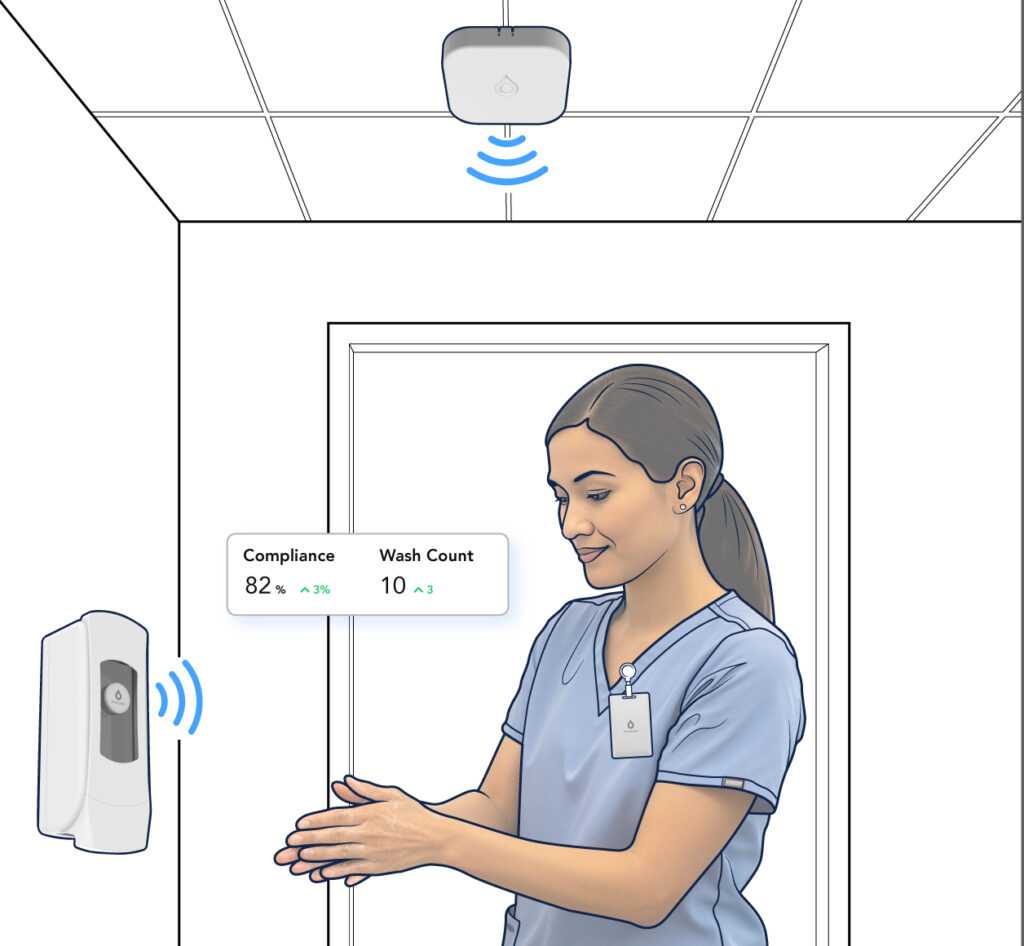
Vitalacy was built on a simple idea: staff do their best work when they have the information to manage their own performance. Vitalacy’s wearables (SmartBand, SmartClip, and SmartBadge) capture hand hygiene around the clock, so results reflect everyday care on every shift, including nights and weekends.
Each user can check their own progress privately, while unit results stay visible to the whole team. Managers get individual-level data for supportive one-on-one coaching, and infection preventionists spend less time auditing and more time improving practice.
That’s the approach Southern New Hampshire Health used to turn early skepticism into peer champions, friendly competition, and steady gains in compliance. The right data, in the right hands, keeps that ownership going long after launch.
Want to See Vitalacy in Action?
See how Vitalacy helps hospitals build frontline ownership of patient safety. Schedule a demo.
Author
-
View all postsVitalacy is committed to reducing patient harm in healthcare through better hand hygiene and patient safety solutions. Bluetooth-enabled smart sensors and wearables help improve outcomes and Leapfrog Hospital Safety Grades.